If you see a problem on the page or link not working - please let me know in the comments section below
ABeFree Publishing
Opinion, Poetry, News, Books, Letters, Photos
Wednesday, 15 April 2026
Updated ABeFree Publishing page and international links
Monday, 8 December 2025
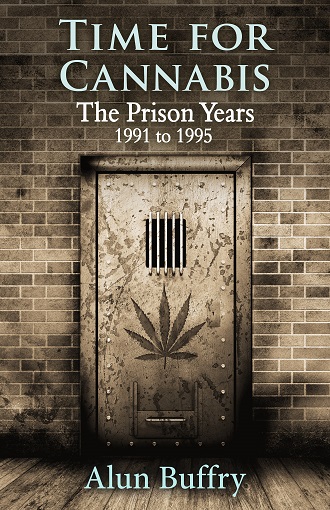
Time For Cannabis - The Prison Years: 1991-1995 Paperback
https://www.amazon.co.uk/exec/obidos/ASIN/0993210767
The author was arrested for cannabis and sent to prison for ten
years. This book reflects his personal experience and serves as a
valuable comparison of prison regimes, how prison can damage and how
prison can repair. HMP Norwich, Cardiff, Whitemoor and Blantyre House
1991 to 1995.
Tuesday, 14 October 2025
Facebook closed down my book about my arrest, trial and imprisonment for cannabis conspiracies
https://www.amazon.co.uk/gp/product/0993210767/
Wednesday, 10 July 2024
Facebook closes page for book about prison for cannabis: Time for Cannabis The Prison Years
Facebook has closed down the page for my book saying it is against their community standards. The page does not encourage the use or sale of any substances deemed illegal to possess under UK law.
The book is available on Amazon https://amzn.to/4eXOjok and all Amazon sites
also on Kindle
https://www.amazon.com/Time-Cannabis-Prison-Years-1991-ebook/dp/B015E1RCIC/
https://www.amazon.co.uk/Time-Cannabis-Prison-Years-1991-ebook/dp/B015E1RCIC/
Thursday, 26 May 2022
Taken From Time For Cannabis The Prison Years 1991 to 1995 ISBN 978-0993210761: INTRODUCTION
Taken From Time For Cannabis The Prison Years 1991 to 1995 ISBN 978-0993210761
INTRODUCTION
This book is not meant to be humorous, although a certain amount of humour is unavoidable, partly because of the nonsense and inconsistencies that I came up against during my time served, and partly because sometimes it hurts so much that one has to either laugh or cry. I fully intend to criticise the prison and the court systems, but not, I hope, unnecessarily, and, I also hope, positively.
This is not meant as a horror story, a fiction, or an analytical work, although I will admit in advance to colouring and flavouring events, changing names, and interspersing actual events with thoughts of the occasion. This is to increase the readability of what might otherwise be a very 'flat' book, considering the flatness of the system.
I consider myself very fortunate, even in this experience, as I have previously travelled to many different countries, and witnessed the different languages and customs therein, which I feel has enabled me to adopt a more detached and somewhat enlightened attitude to the strangeness which I constantly experienced.
Many inmates are either the well learned ‘old lags’ who have been in and out of the system for years, or else are younger and more naive. I was also fortunate to have already received an education, thus being able to further it using the institution's facilities and classes, able to write and read easily, unlike many of my comrades, and thus help the time pass easily and productively.
I was also fortunate enough, for want of a better phrase although it may sound as selfish as it is, to have first arrived at a prison along with some acquaintances, and to recognise a few faces already there who I could turn to for help with day to day life.
Once again I sympathise greatly with the young, scared and lonely convict or detainee.
Although it is only natural that I feel some anger and resentment against the way I have sometimes been treated, in particular by the courts, this emotion has never overwhelmed me.
I see so many things wrong with the world that Mankind has created, not least the way in which selfish and greedy individuals have polluted our beautiful planet and continue to do so, perhaps to the point of no return and the devastation of possibly all life. I fail to see how the Governments on this world, who often seem to me to be evil, can allow the future to develop in this way, ruining the chances of happiness and health for their descendants.
In the sixties I grew up under the constant threat of nuclear devastation imposed by individuals so many miles away, whose identities would never be known to most of us. But this being bad enough, at least there was a chance of survival.
As the sixties have become the nineties there are so many problems in this world, any one of which will destroy us as individuals or as a race, including Aids, acid rain, radiation poisoning, the 'Greenhouse Effect', the ozone depletion, the pollution of the air, sea and land, space junk, chemical additives in our food and water, and on and on and on. Add to this unemployment and the violence shown on TV, in video’s and in the press, to the point of saturation and ‘normality’, and it is less surprising what is happening on our streets.
It has been said that by the age of twelve the average American child has witnessed several thousand murders on the screen, and doubtless a similar figure is true for British children. In the East they say life is cheap, and death is all around, and certainly it seems that in many countries where overpopulation has become such an everyday burden, there are constantly civil wars or violent freedom fighters whom the various governments call terrorists. But do the governments and industrial bosses realise the terror which they daily cause us in our lives, through their greed? Is it surprising there is so much violence and crime in the country? Advertising is a strange practice to apply to people who are unable to afford the goods or services advertised, and although increasing sales amongst the select few, causes nothing but unsatisfied desire amongst everyone else.
Consider this story. It concerns a village deep in the heart of the Egyptian desert near Libya. I forget the name, but that is unimportant.
This small oasis settlement had been there for hundreds if not thousands of years, the locals content to grow what they could, and keep their livestock. In years past they may even have profited from accommodating the occasional traveller. They were certainly unlikely to attract any tourists, unless some big archaeological discovery was ever made. Being short of power, having no electricity and little means of producing it, they were unlikely to attract much big industry. The locals remained poor people, but never starved. They were basically content, having what they needed and most of what they wanted. This is the point: they had most of what they wanted, or rather most of what they knew about that they could want. Of course they may have wanted a better doctor, a panacea, a magic carpet, but these were merely dreams. One day however, one of the locals had to traverse the desert to Cairo, for personal reasons. Suddenly, instead of being surrounded by friends and sands, he found himself in a huge city, some fifteen million souls, tall buildings, thousands of cars, buses, trucks, bicycles, people in all style of dress, restaurants, businesses and even more foreigners than the population of his home village.
What did he see? Advertising.
Somehow he managed to get hold of a television, battery operated, and having been shown how to work it, he took it home with him. Fortunately, or maybe not so, they could pick up signals in the village and they were able to watch films, news and documentaries about a country and a world they never new existed. The children and young men were, of course, able to watch too. And what did they see? Advertising Young mini-skirted girls drinking cola, cowboys with their special cigarettes, the blond bombshell in the tight jeans, the fast car and the gorgeous lady who went with it, watches, stereos, holidays, household appliances and magical gadgets, and so on.
So, what happened to their simple needs and desires? They multiplied out of all proportion. They wanted all these things too, but of course they had no money so they could only dream on in frustration. Until one day three or four young men themselves set off to Cairo, where the streets were paved with gold and one could make enough money to buy some of the well and ‘successfully’ advertised wares. Unfortunately when they got there they found not thousands but millions of people in the same position, unemployment ridiculously high, the city impersonal and apparently uncaring, and their chances of even getting enough food for tomorrow rapidly dwindling. But not everybody was poor. Some people had cars, wore expensive watches and clothes, and drank cola, and presumably had many more modern goods to make their lives apparently easier and happier. So what did our young and impressionable brothers do? They stole. They broke into a house and took what they could. Unfortunately these men were nothing of the professional burglar, knew nothing of finger prints and forensics, and were soon caught. The result? Four more inmates in the hell hole of Cairo prison. Once again the advertising agents had done their job well, convincing the people that they needed the junk they had to sell!
Of course the situation in Britain is not as extreme, but nevertheless it is surely obvious that if one successfully creates an intense desire for something, in the minds of often uneducated and impressionable people, in a time of unemployment when their cash is hard come by, at the same time blasting them with crime on the TV, something somewhere is going to give. A percentage of them, being unable to earn an honest buck, will hit the streets, either taking what they want through robbery and theft, or dealing in drugs or stolen property, prostitution, or any of the many other ways of getting a ‘few readies’.
This is why the prisons are so full. Add to that the people who drink and drive, maybe take drugs steal to get money for their next hit to lift them out of their boredom and fears, everybody taxed beyond what they can afford, and the prison population begins to overflow. Having stated that as my beliefs as to why so much crime occurs, I now have to say that this was only a very minor cause of my conviction.
I will not in this book, attempt to discuss my personal level of guilt or innocence, but I would like to stress the view I had of my offences at the time. The charges against me were concerned with cannabis, a so-called drug. I had consumed it for a number of years, and met untold people in nearly every country I ever visited, smoked with young and old, people new to it and those who had smoked very heavily for very many years, for social, recreational and also ‘spiritual’ purposes,
I did not and do not understand why it remains illegal! In its pure natural forms it certainly seems to have done me no harm, or anyone I have met. No matter how much one consumes there is no danger for a reasonably balanced person. It has been said that the fatal dose is two kilos, dropped on the head from a great height! There is no heavy withdrawal, no side effects. The real problems are that it is often cut with possibly damaging impurities, ranging from sawdust to barbiturates, solvents to boot polish and even cow shit, by the less than scrupulous illegal suppliers; that it is normally mixed with the legal and deadly poisonous tobacco; and that it remains illegal and therefore in the control of the underworld. The so-called controlled drugs are controlled not by the Government, who should concern themselves with the lack of purity of consumables, but by crooks.
Added to this are the many acclaimed medical benefits of cannabis to sufferers of ailments such as multiple sclerosis, glaucoma, asthma and arthritis, its pain-killing properties, and relaxing properties, and the uses of the plant or hemp, for the non-polluting manufacture of paper, linen, rope, all the old maps, Bibles, sails, ropes etc were made from hemp. Its use as a food supply (seeds crushed to make gruel are highly nutritious) for humans and animals, and its use as a clean, renewable (two crops a year) and highly efficacious fuel, cannabis is probably the most versatile God-given substance on earth! Of course, it makes some people apparently lazier, but not all, and many of these become more creative even if only privately.
There is a vast amount of music and art forms produced under the effect of cannabis. About 5% of the population admit to having used it regularly, and in private a great many barristers and other professional men. In private a great many individuals agree that it should be legalised, but are, like the majority of people living under Nazi control who witnessed the inhumane treatment of the Jews, too afraid for their own careers, and freedom, to speak out. The anti-legalisation lobby seems to be left, nowadays, with the completely unfounded statement that it ‘leads to other drugs’. True, 95% of hard drug users confess, when asked in a weighted question, that their first illegal substance was cannabis. But only 5% at most, of cannabis users ever take hard drugs. It is rather like using the argument that 99% of convicted armed robbers admit to owning water pistols as children, to bring about the prohibition of possession and sale of water pistols!
Meanwhile, whilst those in authority and positions of respect usually remain silent, and the various campaigns for legalisation are left in the hands of often unemployed and outcast folk who have little or no experience of organisation, thousands of users and dealers remain in prisons, and millions risk their health by consuming street ‘crap’. Let’s face it, even with the risk of incarceration, people still use it and will continue to use it, and continue to line the pockets of crooks, so it is really time that some government opened its own eyes, legalised it, took control of quality, gained revenue through taxation, and saved the time of police, courts and prisons.
So, having said that, why was it suddenly made illegal in the 1920's? Some political reasons? Strange how the banning of cannabis and hemp suddenly created a vacuum in the supply of ropes and fabrics, shortly before the industrial giants put nylon on the market, and the huge petrochemical companies marketed their synthetics and polluting alternatives. I sometimes wonder if there was a connection.
I am not trying to excuse breaking the law. The law is the law, right or wrong, and the country cannot survive without laws. Judge Pickles, himself an advocate for the legalisation of all drugs, was correct when he said that people should not be allowed to pick and choose which laws to keep and which laws to break, that sort of freedom would be disastrous. Neither should such offenders be given leniency. In prisons there are many who would legalise all sorts of unpleasant things which they have been incarcerated for.
Yet it is true, in the case of the suffragettes and also the homosexuals, who sought to change the law by breaking it, that it can eventually lead to publicity and success. I would, however, stress that very many people with similar experiences to me, never had any intention of hurting anyone, and mostly have never broken any other laws. Their preference for cannabis over alcohol and sedatives, has, nonetheless, resulted in their doors being kicked in, humiliating strip and personal searches, hours of solitude in filthy police cells and extended interviews often interspersed with secret threats and insults, confiscation of assets, collapse of businesses or careers, long periods in prison equivalent to sentences for armed robbery and often greater than for rape offences, and general alienation from their families, friends and society in general.
Why? All because they wanted to get high! Cannabis is used in prisons probably more than on the outside. The staff, I have been told more than once by members of that elite group, tend to turn a blind eye: it keeps the inmates quiet.
So, back to this book, like I say it is not the place to discuss guilt or innocence.
Although I can hardly avoid ‘having a dig at the system’ and those who perpetuate it, that is not my purpose. Rather I want to present the prisons through my eyes, the eyes of an educated and travelled, non-criminally minded, and, as those who know me will agree, harmless forty year old male from Wales.
I felt that by helping to organise contacts and introductions between suppliers and customers, I was helping people by enabling them to get a clean supply, by keeping them away from alcohol, hard drugs, and the dreadful tranquillisers and sedatives, benefited people.
Educated as a scientist at university, I was taught to examine the facts for myself, and not to blindly accept everything I was told.
This is all I ask of you the reader, to consider the evidence with an open mind; those who accept orders and laws without question are the true fascists.
The book is divided into four sections: the first will cover the nightmare of remand in custody. The three prisons which I entered were category B, a maximum security, and a low security C category. I was on wings separated from the so-called vulnerable prisoners, as we call them, ‘nonces’, guilty of horrendous crimes which should not ever be even imagined.
Amongst the prisoners with whom I lived the hatred of the nonces was universal.
As for the others it seems that the longer the sentences the more respect the inmates had for each other. A man two or more years into a ten or twenty year sentence has an entirely different attitude towards his surroundings than a short-timers who is only ‘passing through’.
The main problems for the long-timers are the poor living conditions, being isolated from family and friends, and institutionalisation. Frustration and helplessness, anger at the treatment of self and others, an authoritative hypocrisy, are what causes violence amongst these men. This book is an attempt to portray what I saw and felt at the time.
Thursday, 26 August 2021
Friday, 14 February 2020
Books by Alun Buffry
Thursday, 4 October 2018
COMPETITION - WIN A BOOK
Tuesday, 24 April 2018
TIME FOR CANNABIS - THE PRISON YEARS 1991 TO 1995 - INTRODUCTION
Now at Amazon as PAPERBACK and Kindle
Time for Cannabis - The Prison Years" is a true-life story of the journey through arrest, time on remand, trial and conviction and time served in 4 UK prisons.
This book is a valuable comparsion of prison regimes and personal experiences of the damage and the healing possible, and how the treatment of prisoners can affect them upon release.
All this in prisons that claim their aim is to treat inmates with humanity.
This book is not meant to be humorous, although a certain amount of humour is unavoidable, partly because the nonsense and inconsistencies which I came up against during my time served, and partly because sometimes it hurts so much that one has to either laugh or cry. I fully intend to criticise the prison and the court systems, but not, I hope, unnecessarily, and, I also hope, positively.
This is not meant as a horror story, a fiction, or an analytical work, although I will admit in advance to colouring and flavouring events, changing names, and interspersing actual events with thoughts of the occasion. This is to increase the readability of what might otherwise be a very 'flat' book, considering the flatness of the system.
I consider myself very fortunate, even in this experience, as I have previously travelled to many different countries, and witnessed the different languages and customs therein, which I feel has enabled me to adopt a more detached and somewhat enlightened attitude to the strangeness which I constantly experienced. Many inmates are either the well learned ‘old lags’ who have been in and out of the system for years, or else are younger and more naive.
I was also fortunate to have already received an education, thus being able to further it using the institution's facilities and classes, able to write and read easily, unlike many of my comrades, and thus help the time pass easily and productively. I was also fortunate enough, for want of a better phrase although it may sound as selfish as it is, to have first arrived at a prison along with some acquaintances, and to recognise a few faces already there who I could turn to for help with day to day life. Once again I sympathise greatly with the young, scared and lonely convict or detainee.
Although it is only natural that I feel some anger and resentment against the way I have sometimes been treated, in particular by the courts, this emotion has never overwhelmed me.
I see so many things wrong with the world that Mankind has created, not least the way in which selfish and greedy individuals have polluted our beautiful planet and continue to do so, perhaps to the point of no return and the devastation of possibly all life. I fail to see how the Governments on this world, who often seem to me to be evil, can allow the future to develop in this way, ruining the chances of happiness and health for their descendants. In the sixties I grew up under the constant threat of nuclear devastation imposed by individuals so many miles away, whose identities would never be known to most of us. But this being bad enough, at least there was a chance of survival.
As the sixties have become the nineties there are so many problems in this world, any one of which will destroy us as individuals or as a race, including Aids, acid rain, radiation poisoning, the 'Greenhouse Effect', the ozone depletion, the pollution of the air, sea and land, space junk, chemical additives in our food and water, and on and on and on.
Add to this unemployment and the violence shown on TV, in video’s and in the press, to the point of saturation and ‘normality’, and it is less surprising what is happening on our streets. It has been said that by the age of twelve the average American child has witnessed several thousand murders on the screen, and doubtless a similar figure is true for British children.
In the East they say life is cheap, and death is all around, and certainly it seems that in many countries where overpopulation has become such an everyday burden, there are constantly civil wars or violent freedom fighters whom the various governments call terrorists. But do the governments and industrial bosses realise the terror which they daily cause us in our lives, through their greed? Is it surprising there is so much violence and crime in the country?
Advertising is a strange practice to apply to people who are unable to afford the goods or services advertised, and although increasing sales amongst the select few, causes nothing but unsatisfied desire amongst everyone else. Consider this story. It concerns a village deep in the heart of the Egyptian desert near Libya. I forget the name, but that is unimportant. This small oasis settlement had been there for hundreds if not thousands of years, the locals content to grow what they could, and keep their livestock. In years past they may even have profited from accommodating the occasional traveller. They were certainly unlikely to attract any tourists, unless some big archaeological discovery was ever made. Being short of power, having no electricity and little means of producing it, they were unlikely to attract much big industry.
The locals remained poor people, but never starved. They were basically content, having what they needed and most of what they wanted. This is the point: they had most of what they wanted, or rather most of what they knew about that they could want. Of course they may have wanted a better doctor, a panacea, a magic carpet, but these were merely dreams.
One day however, one of the locals had to traverse the desert to Cairo, for personal reasons. Suddenly, instead of being surrounded by friends and sands, he found himself in a huge city, some fifteen million souls, tall buildings, thousands of cars, buses, trucks, bicycles, people in all style of dress, restaurants, businesses and even more foreigners than the population of his home village. What did he see? Advertising. Somehow he managed to get hold of a television, battery operated, and having been shown how to work it, he took it home with him.
Fortunately, or maybe not so, they could pick up signals in the village and they were able to watch films, news and documentaries about a country and a world they never new existed. The children and young men were, of course, able to watch too. And what did they see? Advertising Young mini-skirted girls drinking cola, cowboys with their special cigarettes, the blond bombshell in the tight jeans, the fast car and the gorgeous lady who went with it, watches, stereos, holidays, household appliances and magical gadgets, and so on.
So, what happened to their simple needs and desires? They multiplied out of all proportion. They wanted all these things too, but of course they had no money so they could only dream on in frustration. Until one day three or four young men themselves set off to Cairo, where the streets were paved with gold and one could make enough money to buy some of the well and ‘successfully’ advertised wares. Unfortunately when they got there they found not thousands but millions of people in the same position, unemployment ridiculously high, the city impersonal and apparently uncaring, and their chances of even getting enough food for tomorrow rapidly dwindling. But not everybody was poor. Some people had cars, wore expensive watches and clothes, and drank cola, and presumably had many more modern goods to make their lives apparently easier and happier. So what did our young and impressionable brothers do? They stole. They broke into a house and took what they could. Unfortunately these men were nothing of the professional burglar, knew nothing of finger prints and forensics, and were soon caught. The result? Four more inmates in the hell hole of Cairo prison. Once again the advertising agents had done their job well, convincing the people that they needed the junk they had to sell!
Of course the situation in Britain is not as extreme, but nevertheless it is surely obvious that if one successfully creates an intense desire for something, in the minds of often uneducated and impressionable people, in a time of unemployment when their cash is hard come by, at the same time blasting them with crime on the TV, something somewhere is going to give. A percentage of them, being unable to earn an honest buck, will hit the streets, either taking what they want through robbery and theft, or dealing in drugs or stolen property, prostitution, or any of the many other ways of getting a ‘few readies’.
This is why the prisons are so full. Add to that the people who drink and drive, maybe take drugs steal to get money for their next hit to lift them out of their boredom and fears, everybody taxed beyond what they can afford, and the prison population begins to overflow.
Having stated that as my beliefs as to why so much crime occurs, I now have to say that this was only a very minor cause of my conviction. I will not in this book, attempt to discuss my personal level of guilt or innocence, but I would like to stress the view I had of my offences at the time.
My charges were concerned with cannabis, a so-called drug. Having consumed it for a number of years, and met untold people in nearly every country I ever visited, smoked with young and old, people new to it and those who had smoked very heavily for very many years, for social, recreational and also ‘spiritual’ purposes,
I did not and do not understand why it remains illegal! In its pure uncut form it certainly seems to have done me no harm, or anyone I have met.
No matter how much one consumes there is no danger for a reasonably balanced person. It has been said that the fatal dose is two kilos, dropped on the head from a great height! There is no heavy withdrawal, no side effects.
The real problems are that it is often cut with possibly damaging impurities, ranging from sawdust to barbiturates, solvents to boot polish and evencow shit, by the less than scrupulous illegal suppliers; that it is normally mixed with the legal and deadly poisonous tobacco; and that it remains illegal and therefore in the control of the underworld. The so-called controlled drugs are controlled not by the Government, who should concern themselves with the lack of purity of consumables, but by crooks.
Added to this are the many acclaimed medical benefits of cannabis to sufferers of ailments such as multiple sclerosis, glaucoma, asthma and arthritis, its pain-killing properties, and relaxing properties, and the uses of the plant - hemp, for the non-polluting manufacture of paper, linen, rope - all the old maps, Bibles, sails, ropes etc were made from hemp - its use as a food supply (seeds crushed to make gruel are highly nutritious) for humans and animals, and its use as a clean, renewable (two crops a year) and highly efficacious fuel, cannabis is probably the most versatile God-given substance on earth! Of course, it makes some people apparently lazier, but not all, and many of these become more creative even if only privately.
There is a vast amount of music and art forms produced under the effect of cannabis.
About 5% of the population admit to having used it regularly, and in private a great many barristers and other professional men. In private a great many individuals agree that it should be legalised, but are, like the majority of people living under Nazi control who witnessed the inhumane treatment of the Jews, too afraid for their own careers, and freedom, to speak out. The anti-legalisation lobby seems to be left, nowadays, with the completely unfounded statement that it ‘leads to other drugs’. True, 95% of hard drug users confess, when asked in a weighted question, that their first illegal substance was cannabis. But only 5% at most, of cannabis users ever take hard drugs. It is rather like using the argument that 99% of convicted armed robbers admit to owning water pistols as children, to bring about the prohibition of possession and sale of water pistols! Meanwhile, whilst those in authority and positions of respect usually remain silent, and the various campaigns for legalisation are left in the hands of often unemployed and outcast folk who have little or no experience of organisation, thousands of users and dealers remain in prisons, and millions risk their health by consuming street ‘crap’.
Let’s face it, even with the risk of incarceration, people still use it and will continue to use it, and continue to line the pockets of crooks, so it is really time that some government opened its own eyes, legalised it, took control of quality, gained revenue through taxation, and saved the time of police, courts and prisons. So, having said that, why was it suddenly made illegal in the 1920's? Some political reasons? Strange how the banning of cannabis and hemp suddenly created a vacuum in the supply of ropes and fabrics, shortly before the industrial giants put nylon on the market, and the huge petrochemical companies marketed their synthetics and polluting alternatives. I sometimes wonder if there was a connection.
I am not trying to excuse breaking the law. The law is the law, right or wrong, and the country cannot survive without laws. Judge Pickles, himself an advocate for the legalisation of all drugs, was correct when he said that people should not be allowed to pick and choose which laws to keep and which laws to break, that sort of freedom would be disastrous. Neither should such offenders be given leniency. In prisons there are many who would legalise all sorts of unpleasant things which they have been incarcerated for. Yet it is true, in the cases of the suffragettes and also the homosexuals, who sought to change the law by breaking it, that it can eventually lead to publicity and success.
I would, however, stress that very many people with similar experiences to me, never had any intention of hurting anyone, and mostly have never broken any other laws. Their preference for cannabis over alcohol and sedatives, has, nonetheless, resulted in their doors being kicked in, humiliating strip and personal searches, hours of solitude in filthy police cells and extended interviews often interspersed with secret threats and insults, confiscation of assets, collapse of businesses or careers, long periods in prison equivalent to sentences for armed robbery and often greater than for rape offences, and general alienation from their families, friends and society in general.
Why? All because they wanted to get high! Cannabis is used in prisons probably more than on the outside. The staff, I have been told more than once by members of that elite group, tend to turn a blind eye - it keeps the inmates quiet.
So, back to this book, like I say it is not the place to discuss guilt or innocence. Although I can hardly avoid ‘having a dig at the system’ and those who perpetuate it, that is neither my purpose.
Rather I want to present the prisons through my eyes, the eyes of an educated and travelled, non-criminally minded, and, as those who know me will agree, harmless forty year old male from Wales. I felt that by helping to organise contacts and introductions between suppliers and customers, I was helping people by enabling them to get a clean supply, by keeping them away from alcohol, hard drugs, and the dreadful tranquillisers and sedatives, benefited people.
Educated as a scientist at university, I was taught to examine the facts for myself, and not to blindly accept everything I was told.
This is all I ask of you the reader, to consider the evidence with an open mind; those who accept orders and laws without question are the true fascists.
The book is divided into four sections: the first will cover the nightmare of remand in custody.
The three prisons which I entered were category B, a maximum security, and a low security C category. I was on wings separated from the so-called vulnerable prisoners, as we call them, ‘nonces’, guilty of horrendous crimes which should not ever be even imagined.
Amongst the prisoners with whom I lived the hatred of the nonces was universal.
As for the others it seems that the longer the sentences the more respect the inmates had for each other. A man two or more years into a ten or twenty year sentence has an entirely different attitude towards his surroundings than a short-timers who is only ‘passing through’.
The main problems for the long-timers are the poor living conditions, being isolation from family and friends, and institutionalisation.
Frustration and helplessness, anger at the treatment of self and others, an authoritative hypocrisy, are what causes violence amongst these men.
This book is an attempt to portray what I saw and felt at the time.
Sunday, 22 May 2016
TIME FOR CANNABIS - THE PRISON YEARS 1991 TO 1995 - INTRODUCTION
Now at Amazon as PAPERBACK and Kindle
Time for Cannabis - The Prison Years" is a true-life story of the journey through arrest, time on remand, trial and conviction and time served in 4 UK prisons.
This book is a valuable comparsion of prison regimes and personal experiences of the damage and the healing possible, and how the treatment of prisoners can affect them upon release.
All this in prisons that claim their aim is to treat inmates with humanity.
This book is not meant to be humorous, although a certain amount of humour is unavoidable, partly because the nonsense and inconsistencies which I came up against during my time served, and partly because sometimes it hurts so much that one has to either laugh or cry. I fully intend to criticise the prison and the court systems, but not, I hope, unnecessarily, and, I also hope, positively.
This is not meant as a horror story, a fiction, or an analytical work, although I will admit in advance to colouring and flavouring events, changing names, and interspersing actual events with thoughts of the occasion. This is to increase the readability of what might otherwise be a very 'flat' book, considering the flatness of the system.
I consider myself very fortunate, even in this experience, as I have previously travelled to many different countries, and witnessed the different languages and customs therein, which I feel has enabled me to adopt a more detached and somewhat enlightened attitude to the strangeness which I constantly experienced. Many inmates are either the well learned ‘old lags’ who have been in and out of the system for years, or else are younger and more naive.
I was also fortunate to have already received an education, thus being able to further it using the institution's facilities and classes, able to write and read easily, unlike many of my comrades, and thus help the time pass easily and productively. I was also fortunate enough, for want of a better phrase although it may sound as selfish as it is, to have first arrived at a prison along with some acquaintances, and to recognise a few faces already there who I could turn to for help with day to day life. Once again I sympathise greatly with the young, scared and lonely convict or detainee.
Although it is only natural that I feel some anger and resentment against the way I have sometimes been treated, in particular by the courts, this emotion has never overwhelmed me.
I see so many things wrong with the world that Mankind has created, not least the way in which selfish and greedy individuals have polluted our beautiful planet and continue to do so, perhaps to the point of no return and the devastation of possibly all life. I fail to see how the Governments on this world, who often seem to me to be evil, can allow the future to develop in this way, ruining the chances of happiness and health for their descendants. In the sixties I grew up under the constant threat of nuclear devastation imposed by individuals so many miles away, whose identities would never be known to most of us. But this being bad enough, at least there was a chance of survival.
As the sixties have become the nineties there are so many problems in this world, any one of which will destroy us as individuals or as a race, including Aids, acid rain, radiation poisoning, the 'Greenhouse Effect', the ozone depletion, the pollution of the air, sea and land, space junk, chemical additives in our food and water, and on and on and on.
Add to this unemployment and the violence shown on TV, in video’s and in the press, to the point of saturation and ‘normality’, and it is less surprising what is happening on our streets. It has been said that by the age of twelve the average American child has witnessed several thousand murders on the screen, and doubtless a similar figure is true for British children.
In the East they say life is cheap, and death is all around, and certainly it seems that in many countries where overpopulation has become such an everyday burden, there are constantly civil wars or violent freedom fighters whom the various governments call terrorists. But do the governments and industrial bosses realise the terror which they daily cause us in our lives, through their greed? Is it surprising there is so much violence and crime in the country?
Advertising is a strange practice to apply to people who are unable to afford the goods or services advertised, and although increasing sales amongst the select few, causes nothing but unsatisfied desire amongst everyone else. Consider this story. It concerns a village deep in the heart of the Egyptian desert near Libya. I forget the name, but that is unimportant. This small oasis settlement had been there for hundreds if not thousands of years, the locals content to grow what they could, and keep their livestock. In years past they may even have profited from accommodating the occasional traveller. They were certainly unlikely to attract any tourists, unless some big archaeological discovery was ever made. Being short of power, having no electricity and little means of producing it, they were unlikely to attract much big industry.
The locals remained poor people, but never starved. They were basically content, having what they needed and most of what they wanted. This is the point: they had most of what they wanted, or rather most of what they knew about that they could want. Of course they may have wanted a better doctor, a panacea, a magic carpet, but these were merely dreams.
One day however, one of the locals had to traverse the desert to Cairo, for personal reasons. Suddenly, instead of being surrounded by friends and sands, he found himself in a huge city, some fifteen million souls, tall buildings, thousands of cars, buses, trucks, bicycles, people in all style of dress, restaurants, businesses and even more foreigners than the population of his home village. What did he see? Advertising. Somehow he managed to get hold of a television, battery operated, and having been shown how to work it, he took it home with him.
Fortunately, or maybe not so, they could pick up signals in the village and they were able to watch films, news and documentaries about a country and a world they never new existed. The children and young men were, of course, able to watch too. And what did they see? Advertising Young mini-skirted girls drinking cola, cowboys with their special cigarettes, the blond bombshell in the tight jeans, the fast car and the gorgeous lady who went with it, watches, stereos, holidays, household appliances and magical gadgets, and so on.
So, what happened to their simple needs and desires? They multiplied out of all proportion. They wanted all these things too, but of course they had no money so they could only dream on in frustration. Until one day three or four young men themselves set off to Cairo, where the streets were paved with gold and one could make enough money to buy some of the well and ‘successfully’ advertised wares. Unfortunately when they got there they found not thousands but millions of people in the same position, unemployment ridiculously high, the city impersonal and apparently uncaring, and their chances of even getting enough food for tomorrow rapidly dwindling. But not everybody was poor. Some people had cars, wore expensive watches and clothes, and drank cola, and presumably had many more modern goods to make their lives apparently easier and happier. So what did our young and impressionable brothers do? They stole. They broke into a house and took what they could. Unfortunately these men were nothing of the professional burglar, knew nothing of finger prints and forensics, and were soon caught. The result? Four more inmates in the hell hole of Cairo prison. Once again the advertising agents had done their job well, convincing the people that they needed the junk they had to sell!
Of course the situation in Britain is not as extreme, but nevertheless it is surely obvious that if one successfully creates an intense desire for something, in the minds of often uneducated and impressionable people, in a time of unemployment when their cash is hard come by, at the same time blasting them with crime on the TV, something somewhere is going to give. A percentage of them, being unable to earn an honest buck, will hit the streets, either taking what they want through robbery and theft, or dealing in drugs or stolen property, prostitution, or any of the many other ways of getting a ‘few readies’.
This is why the prisons are so full. Add to that the people who drink and drive, maybe take drugs steal to get money for their next hit to lift them out of their boredom and fears, everybody taxed beyond what they can afford, and the prison population begins to overflow.
Having stated that as my beliefs as to why so much crime occurs, I now have to say that this was only a very minor cause of my conviction. I will not in this book, attempt to discuss my personal level of guilt or innocence, but I would like to stress the view I had of my offences at the time.
My charges were concerned with cannabis, a so-called drug. Having consumed it for a number of years, and met untold people in nearly every country I ever visited, smoked with young and old, people new to it and those who had smoked very heavily for very many years, for social, recreational and also ‘spiritual’ purposes,
I did not and do not understand why it remains illegal! In its pure uncut form it certainly seems to have done me no harm, or anyone I have met.
No matter how much one consumes there is no danger for a reasonably balanced person. It has been said that the fatal dose is two kilos, dropped on the head from a great height! There is no heavy withdrawal, no side effects.
The real problems are that it is often cut with possibly damaging impurities, ranging from sawdust to barbiturates, solvents to boot polish and evencow shit, by the less than scrupulous illegal suppliers; that it is normally mixed with the legal and deadly poisonous tobacco; and that it remains illegal and therefore in the control of the underworld. The so-called controlled drugs are controlled not by the Government, who should concern themselves with the lack of purity of consumables, but by crooks.
Added to this are the many acclaimed medical benefits of cannabis to sufferers of ailments such as multiple sclerosis, glaucoma, asthma and arthritis, its pain-killing properties, and relaxing properties, and the uses of the plant - hemp, for the non-polluting manufacture of paper, linen, rope - all the old maps, Bibles, sails, ropes etc were made from hemp - its use as a food supply (seeds crushed to make gruel are highly nutritious) for humans and animals, and its use as a clean, renewable (two crops a year) and highly efficacious fuel, cannabis is probably the most versatile God-given substance on earth! Of course, it makes some people apparently lazier, but not all, and many of these become more creative even if only privately.
There is a vast amount of music and art forms produced under the effect of cannabis.
About 5% of the population admit to having used it regularly, and in private a great many barristers and other professional men. In private a great many individuals agree that it should be legalised, but are, like the majority of people living under Nazi control who witnessed the inhumane treatment of the Jews, too afraid for their own careers, and freedom, to speak out. The anti-legalisation lobby seems to be left, nowadays, with the completely unfounded statement that it ‘leads to other drugs’. True, 95% of hard drug users confess, when asked in a weighted question, that their first illegal substance was cannabis. But only 5% at most, of cannabis users ever take hard drugs. It is rather like using the argument that 99% of convicted armed robbers admit to owning water pistols as children, to bring about the prohibition of possession and sale of water pistols! Meanwhile, whilst those in authority and positions of respect usually remain silent, and the various campaigns for legalisation are left in the hands of often unemployed and outcast folk who have little or no experience of organisation, thousands of users and dealers remain in prisons, and millions risk their health by consuming street ‘crap’.
Let’s face it, even with the risk of incarceration, people still use it and will continue to use it, and continue to line the pockets of crooks, so it is really time that some government opened its own eyes, legalised it, took control of quality, gained revenue through taxation, and saved the time of police, courts and prisons. So, having said that, why was it suddenly made illegal in the 1920's? Some political reasons? Strange how the banning of cannabis and hemp suddenly created a vacuum in the supply of ropes and fabrics, shortly before the industrial giants put nylon on the market, and the huge petrochemical companies marketed their synthetics and polluting alternatives. I sometimes wonder if there was a connection.
I am not trying to excuse breaking the law. The law is the law, right or wrong, and the country cannot survive without laws. Judge Pickles, himself an advocate for the legalisation of all drugs, was correct when he said that people should not be allowed to pick and choose which laws to keep and which laws to break, that sort of freedom would be disastrous. Neither should such offenders be given leniency. In prisons there are many who would legalise all sorts of unpleasant things which they have been incarcerated for. Yet it is true, in the cases of the suffragettes and also the homosexuals, who sought to change the law by breaking it, that it can eventually lead to publicity and success.
I would, however, stress that very many people with similar experiences to me, never had any intention of hurting anyone, and mostly have never broken any other laws. Their preference for cannabis over alcohol and sedatives, has, nonetheless, resulted in their doors being kicked in, humiliating strip and personal searches, hours of solitude in filthy police cells and extended interviews often interspersed with secret threats and insults, confiscation of assets, collapse of businesses or careers, long periods in prison equivalent to sentences for armed robbery and often greater than for rape offences, and general alienation from their families, friends and society in general.
Why? All because they wanted to get high! Cannabis is used in prisons probably more than on the outside. The staff, I have been told more than once by members of that elite group, tend to turn a blind eye - it keeps the inmates quiet.
So, back to this book, like I say it is not the place to discuss guilt or innocence. Although I can hardly avoid ‘having a dig at the system’ and those who perpetuate it, that is neither my purpose.
Rather I want to present the prisons through my eyes, the eyes of an educated and travelled, non-criminally minded, and, as those who know me will agree, harmless forty year old male from Wales. I felt that by helping to organise contacts and introductions between suppliers and customers, I was helping people by enabling them to get a clean supply, by keeping them away from alcohol, hard drugs, and the dreadful tranquillisers and sedatives, benefited people.
Educated as a scientist at university, I was taught to examine the facts for myself, and not to blindly accept everything I was told.
This is all I ask of you the reader, to consider the evidence with an open mind; those who accept orders and laws without question are the true fascists.
The book is divided into four sections: the first will cover the nightmare of remand in custody.
The three prisons which I entered were category B, a maximum security, and a low security C category. I was on wings separated from the so-called vulnerable prisoners, as we call them, ‘nonces’, guilty of horrendous crimes which should not ever be even imagined.
Amongst the prisoners with whom I lived the hatred of the nonces was universal.
As for the others it seems that the longer the sentences the more respect the inmates had for each other. A man two or more years into a ten or twenty year sentence has an entirely different attitude towards his surroundings than a short-timers who is only ‘passing through’.
The main problems for the long-timers are the poor living conditions, being isolation from family and friends, and institutionalisation.
Frustration and helplessness, anger at the treatment of self and others, an authoritative hypocrisy, are what causes violence amongst these men.
This book is an attempt to portray what I saw and felt at the time.
Monday, 26 October 2015
HMP Blantyre House (Taken From Time For Cannabis: The Prison Years 1991 to 1995 by Alun Buffry)
From Time For Cannabis: The Prison Years 1991 to 1995
Available on Amazon as paperback and Kindle
After writing the previous chapters, I had wanted to write about Blantyre House, a totally different and altogether more positive experience with a fresh start, rid of the influence of the Whitemoor memories, so I had decided to take a break.
Unintentionally, that break lasted 17 years!
Now I feel I can comfortably write this chapter, not that the long gap in time was due entirely to the Whitemoor experience, after all, I left that place a couple of years before starting this book. But there have been other things on my mind, which included co-founding and running a small political party based on the single issue of cannabis, travelling as I could afford and a lot of other writing
So, having been approved for HMP Blantyre House, Gary (the inmate travelling with me) and myself were all packed up and ready to leave Whitemoor as soon as we could.
We had heard favourable reports of the relaxed regime there and were looking forward to seeing our bridge-playing, ecstasy-smuggler friends Will and Tom along with a few others from Whitemoor.
This is what the Department of Justice says about Blantyre House in 2015:
"Blantyre House is an adult male category 'C/D' resettlement prison. The buildings themselves are located in a country house which was taken over by the Prison Commission in 1954, having previously operated as a Fegan Home. It was a Detention Centre for young offenders before converting to a resettlement prison for long term prisoners.
"Regime: The regime at Blantyre is designed to prepare men for their eventual release. Within the first six months it is compulsory for the men to continue to build upon their education, which will include obtaining Basic Skills qualifications and taking part in courses such as healthy lifestyles, social and life skills, independent living and preparation for work. There are also a number of vocational courses on offer including IT, Dry-lining and Plastering. Once risk-assessed prisoners are allowed the opportunity to develop their education by attending external colleges to obtain further employment skills. As well as education, prisoners are able to work as cleaners, kitchen workers, orderlies etc."
http://www.justice.gov.uk/contacts/prison-finder/blantyre-house
At Whitemoor on the day of our transfer, after the traditional slops for breakfast, we were escorted through numerous gates along with our possessions. We were taken to a holding cell to await the arrival of the screws and the transportation.
We were told to change into our own clothing by the screw from Blantyre House, which we gladly did. I felt like tearing up the prison clothing. But within minutes he came back and told us we would have to change again because the Whitemoor administration would not allow us in our own clothing whilst still inside the prison. So we changed, again. We did not want to get into trouble before we even left and anyway we were used to petty rules being thrown at us seemingly willy-nilly.
Once we were inside the prison van and outside the prison grounds, we were told we could change back into our own clothing again. The screw actually apologised. He said that at Blantyre House everyone knew the rules and he repeated them.
No alcohol or drugs, no violence or verbal abuse, obey the laws of the land and commit to a minimum of half a day at education every week.
They also told us to be careful with the food, especially the chips, as it was served hot and may be the first hot food we had eaten in prison. That was wrong of course but they did not know that I had been cooking much of my own food along with Ken and others, in the small kitchen on the wing, but they were correct about the Blantyre food as I was to find out.
The journey from Peterborough to Kent took a few hours and we were given sandwiches. The time went quick even though we could not see the scenery.
HMP Blantyre House was in Kent near the village of Goudhurst, close to Cranbrook, beautiful countryside famous for growing hops used to manufacture the drug alcohol.
As we arrived at Blantyre House, pulled in through the gates; we climbed out of the van and there stood my friend Will.
Will took us to our "rooms" inside the large wooden building. He said we would be sharing for a while but later would move to other rooms; this was the reception cell.
The cell contained two bunk beds but Gary and I were the only two that would be using them that night. Apparently we would be here a few days and then moved to another "room". We had our own keys. The room was next to the Principal Officer's (The PO) office; I assumed it was so they could better keep an eye on us.
Will also told us that he would take us to the dining hall as dinner was about to be served, then after that we would go to see the PO's office to "check in".
Afterwards, Will said, he would show us the prison grounds where we were free to wander at almost any time between 8 am and 8 pm. After 8 pm we had to be inside the main building and the outside doors would be locked, but we could associate in rooms until 10 pm.
I do not remember what I had for dinner except that it was vegetarian and hot and quite tasty. Will had arranged for us to share a table with himself and Tom from Whitemoor and a few others; one was Terry P. who was doing time for his part is an horrific robbery.
There were about 100 inmates at Blantyre and the dining room was crowded. Will told us that we would probably be put on washing up duty the next day, and do that, as was traditional for new arrivals, until more new inmates arrived. Then, he said, we would probably be put on cleaning and after that we would either do outside work or college, or do full time education. Being on my Open University course in computing and busy building my database on Ancient Egypt, education would suit me.
After dinner, as promised, Will took us to the Principle Officer's office. Gary Catton, the screw that had interviewed me in Whitemoor, was the PO on duty. Officers, though, weren't called "screws" or even "kangas" here. It took just a few minutes of confirming our names and numbers and being told that after breakfast the next day we had to report to the kitchen and do washing up duty.
After that, Will took Gary and I for a walk-about; he showed us the education block, canteen, church building and gym. There was quite a large green area where rugby and other sport was played.
On the Saturday, just two days after arriving, we joined about twenty others along with several officers, for a five mile country ramble. It was amazing, instead of being forced to march together as I had anticipated, we were all allowed to walk at our own paces. I found myself walking down a beautiful and quiet grove where the trees were brown and freshly fallen leaves were scattered about, passing large gates to houses and small cottages. I felt there may have been a babbling brook somewhere beyond but out of our sight.
After where I had been the last few years and even my home life before that, this was a new world. I felt free and trusted.
Beyond that area there was a fence with an open gate and the other side of that we saw several inmates' allotments, a chicken run, and a large field part of which inmates had worked on for use as a small golf course.
We walked right around the inside of the fence. We walked to places where we could not be seen from the main buildings. There was no razor wire and no visible cameras. It was hard to believe that we were not being watched. A result of Whitemoor paranoia?
I looked up at the trees but still saw no cameras. The only razor wire, Will said, was near the canteen, to stop local kids from climbing over and stealing stuff!
What an incredible change from Whitemoor. Here they talked about the "ethos" and the Governor, Jim Semple said that he did not like to be called "Sir". It was difficult at first to know who was a screw and who was a con.
I slept well that night, although Gary complained that I had snored loudly.


.jpg)