Amazon Link
Showing posts with label Khyber Pass. Show all posts
Showing posts with label Khyber Pass. Show all posts
Friday, 10 July 2026

Wednesday, 11 March 2026
Al Zeeman
Alzee was a name given to me in 1971 ("Hey Alzee Man!") and many have known me by that name or vaiations since then - Alsee, Alsy, Alsey - my birth name Alun Buffry, I have never hidden my identity and most of my books were written under that name - for this one I decided to make a change.

Al Zeeman first consumed cannabis in 1970 whilst at University, firstly in the form of “Coffee Bhangs” and hash cakes, then smoking mixed with tobacco or pure in pipes. After graduating, he travelled across Europe to India and back, stopping off in several places such as Kabul to sample the hasheesh.
Upon returning from
India, he started following the teaching and practices of Prem Rawat,
then known as “Guru Maharaji”, a fifteen year old from India.
A
few years later, Al started smoking cannabis again and continued to so
for almost 50 years, including his time in several UK prisons. He
continued to follow Prem Rawat which he still does today.
But
during the time since 1970, Al Zeeman travelled widely throughout
Europe, also visiting Morocco, India, Nepal, Kashmir and Egypt, meeting
many people and smoking hos weed (and theirs) and was so often "stoned
again”.
The author also participated in “Legalise
Cannabis Campaigns” for over thirty years, even standing for Parliament
under the banner of the Legalise Cannabis Alliance (LCA) on the single
issue, in 2001.
This is his account of his experiences, the places he saw and some of the friends he made.
This
book, along with many amusing anecdotes, recalls his encounters and
near misses with the forces of law in the UK. Also the book contains a
wealth of information on the uses of cannabis / hemp, the types and
sources, smoking utensils, some political opinions and a chronology of
cannabis.
Zeeman pays tribute to the cannabis campaigners and
enthusiasts that he met along the way, many of whom have now passed on,
including Howard Marks, Chris Baldwin, Don Barnard, Winston Matthews,
Mark and Lezley Gibson, Clara O’Donnell, Jack and Tina Girling, Lee
Harris, Steve Pank, Jooep Oomen and “Granny” Pat Tabram.
At the end of the book, Zeeman gives his birth name, Alun Buffry, stating that he has never made any attempt to hide his identity.
Table of Contents:
NICOLAS CULPEPER, CANNABIS LAWS – PROHIBITION, COFFEE-BHANGS AND HASH CAKES, THE DEALER’S HAT, FIRST CHILLUM, A BRUSH OR TWO WITH THE LAW,FRANKFURT, MUNICH, BELGRADE, ISTANBUL, AFYON /AFYONKARAISHAR, THE FISHERMAN ON THE BEACH, HEADING EAST, AFGHANISTAN, KABUL, HELMUT, KHYBER PASS AND ONWARDS TO INDIA, INDIA: HARIDWAR AND THE GANGES, NORFOLK, THE WRECKING CREW, BUSTED, WICKLEWOOD, MR NICE, JACK AND LILY, STANLEY ATKINS, JOE HARDY-SHARP,POLISH CHRIS – CHRIS LAUSCH, MONTY, LESLEY JAMES, THE “BIG MONEY GANG”,CAMPAIGN TO LEGALISE CANNABIS INTERNATIONAL ASSOCIATION 1992, BANGED UP, HOWARD MARKS, MR NICE 1997,THE LEGALISE CANNABIS ALLIANCE (LCA) 1999, TRAVELLING HIGH, NOL VAN SHAIK’S SPANISH COMPLEX, CAMPAIGN GROUPS DURING AND AFTER THE LCA, METHODS OF CONSUMPTION, TYPES AND SOURCES OF CANNABIS, RECREATIONAL OR MEDICAL, CANNABIS ABROAD, HOLLAND AND THE NETHERLANDS, SPAIN, PORTUGAL, IRELAND, GERMANY, FRANCE, SWITZERLAND, GREECE, ITALY: SICILY, MOROCCO, INDIA, OTHER COUNTRIES, THE BAD STUFF, GROW YOUR OWN, CANNABIS PROTESTS, HEADSHOPS, SMOKEY BEARS PICNICS, RALLIES AND MARCHES, COFFEESHOPS, BYE BYE, A CHRONOLOGY OF CANNABIS.
Sunday, 15 February 2026
Kabul to Peshawar via the Khyber Pass - Meeting Hellmut, 1972
Taken from "All About My Hat, The Hippy Trail 1972"

Peshawar and the Khyber Pass
It was 180 miles from Kabul to Peshawar, across the Khyber Pass.
Keith read quietly from his guide book:
“Peshawar is the capital of Khyber Pakhtunkhwa, formerly known as the North-West Frontier Province, and the administrative centre and economic hub for the Federally Administered Tribal Areas of Pakistan.
"Peshawar is situated in a large valley near the eastern end of the Khyber Pass, close to the Pakistan-Afghan border. Known as "City on the Frontier", Peshawar's strategic location on the crossroads of Central Asia and South Asia has made it one of the most culturally vibrant and lively cities in the greater region. Peshawar is irrigated by various canals of the Kabul River, Kunhar River and by its right tributary, the Bara River.
“Being among the most ancient cities of the region between Central, South and West Asia, Peshawar has for centuries been a centre of trade between Afghanistan, South Asia, Central Asia and the Middle East. As an ancient centre of learning, the second century BC. Bakhshali Manuscript used in the Bakhshali approximation was found nearby.
“In 1947, Peshawar became part of the newly created Pakistan after politicians from the Frontier approved the merger.
“Over 99% of Peshawar's population is Muslim, mostly Sunnis, with Twelver Shias the significant minority group. Despite the mainly Islamic nature of modern Peshawar, the city was previously home to a diverse range of communities, such as Hindus, Sikhs, Jews, Zoroastrians and members of the Bahá'í Faith. A significant number of Sikhs, in addition to smaller communities of Hindus and Christians, continue to exist in Peshawar”
“That is very interesting, I did not know that history”, said a voice with a German accent belonging to a man that sat opposite us.
“My name is Hellmut. You want smoke some joint?”
He had lit and was offering them a joint – on the bus!
Well, I could tell Al liked the smell so he quickly accepted it with a “Danke” (thank you in German, Al thought). He took three rapid puffs and passed it to Keith who took three puffs and passed what was left back to Hellmut.
Al was feeling quite self-conscious about smoking on a bus heading to Pakistan. He thought everyone was looking.
He turned round to look back down the bus.
Almost every seat had a man leaning out and looking back up the bus at him!
And, Al noticed, they were all grinning and smiling and nodding, as if to say “You are stoned now, as we are stoned too."
Al thought those men probably did not smoke cannabis but it must have been in their blood, handed down over the centuries.
He relaxed, chatted with Helmut a while. Helmut said he travelled that route every year for ten years. Then as the calming effect of the lovely hash took over, he sat and started to enjoy what was to be an incredible journey through the Khyber Pass.
The over-laden coach trundled on, struggling up hills and rounding bends with sheer drops, then down and up again. At the end of most down bits there was a small waterfall. At the end of each up bits there was a beautiful view, often including the same road below them, winding around the boulders in between the fields.
At some places there were what looked like caves in the sides of the hills.

We passed small groups of men that seemed to be just sitting and looking; we saw young boys driving herds of sheep or goats or camels and several times we had to stop to let them pass us.
Occasionally we saw groups of women carrying baskets, bundles or clay pots on their heads, trailed by urchin-looking children – her children always waving at the coach.
The women here were dressed very differently and, Al thought, more practically than those in Burkas. These showed their faces beneath head-scarves decorated with beads and chains and quite colourful too. These must be tribal mountain women, Al thought.
The coach was moving quite slowly and Al had a chance to take a couple of photographs through the window, of the valley below. He wished he had more film, but thought he would not be able to afford it.
Hellmut was quite jolly company and did lot of talking. They smoked another couple of joints.
He explained that he travelled this same route for years and the border post guards knew him. He always gave them a little money and they left him alone. He also said that every year he visited Afghanistan and Pakistan, India and Nepal, and arranged for shipments of hash to be sent back to London where his partner lived. He travelled for six months, then went back to London and his partner did the same. They were paying off customs everywhere, including the UK, and they were making a lot of money. But, he said, he preferred to stay in cheap hotels, not the big ones, and then he met people.
So Hellmut too, was heading for the Hotel Rainbow.
“Very very cheap”, he said, “But it is OK for a few days, but do not eat their food – it is better to go out to eat in a secret local restaurant that I know, it is good and clean.”
Hellmut said that after Peshawar, he was heading to Lahore and then would fly to Amritsar where the “Golden Temple” was and where travellers could sleep and eat for free, courtesy of the Sikhs. The same plan as Al and Keith's, they used to call it the “Hippy Trail.”
“Hey listen to this about the Khyber Pass man,” said Keith, who read again from his travel guide:
“The Khyber Pass is a mountain pass connecting Afghanistan and Pakistan, and India cutting through the north-eastern part of the Spin Ghar mountains. An integral part of the ancient Silk Road, it is one of the oldest known passes in the world. Throughout history it has been an important trade route between Central Asia and South Asia and a strategic military location. The summit of the pass is about 3 miles inside Pakistan at Landi Kotal, about three thousand five hundred feet.
“The pass itself is entirely in Pakistan. The nearest major cities on the route that goes over the pass are Jalalabad in Afghanistan and Peshawar in Pakistan, with Torkham as border crossing point.
“For strategic reasons, after the First World War the British built a heavily engineered railway through the Pass. The Khyber Pass Railway from Jamrud, near Peshawar, to the Afghan border near Landi Kotal was opened in 1925.
“At the Pakistani frontier post, travellers are advised not to wander away from the road, as the location is a barely controlled Federally Administered Tribal Area.
“Crossing the Khyber has always been something of an adventure. Even in peacetime, this was a fairly wild region where banditry and tribal warfare were part of local history and almost every adult male went armed. “
It was quite a journey until they reached Peshawar, but once there, with Helmut leading the way, they soon found and booked into the Rainbow Hotel. Reception gladly changed Afghani money into Pakistani Rupees.
The room for Al and Keith was small with two beds, but the view out of the window into the street below was good.
It was May 5 1972.

View from Rainbow Hotel, Peshawar
Sunday, 31 July 2022
End of July 1972: Peshawar to Kabul via the Khyber Pass
Taken From All About My Hat The Hippy Trail 1972 ISBN 978-0993210716
The following day, July 29 1972, was the day of the bus ride back through the Khyber Pass to Kabul, the journey that had so impressed and inspired Al on his way to India a few months earlier.
They journeyed past trains of laden camels that occasionally blocked the road, fields with sheep and cattle, the strange-looking men wrapped in blankets even in the heat of the sun, standing or sitting is groups seemingly in the middle of nowhere.
There was an incredible movement of people across the border and back. Many were walking in groups. Many of the men were dressed in garments the light-brown colour of the earth. Others were dressed in coloured tunics with waistcoats over light trousers. Most wore turbans.
The women were dressed in colourful outfits or entirely in blue, black or coloured burkas and many carried large pots or bundles on their heads. The children waved at the bus.
The bus itself was a rickety old machine that chugged along up and down the hills. As well as Al and Diane, there were several other western-looking travellers but sometimes it was hard to tell as they were tanned brown and dressed in clothes seen in India. In any case, they all kept themselves to themselves. There was no sign of any cannabis smoking.
As the road zigzagged upwards, sometimes passing over bridges built over what looked like small streams, Al noticed the many tent cities below in the valley, all with herds of camels and donkeys. Higher were the remains of the many forts originally built by the British. In the distance were snowy peaks.
High on the pass were fortified buildings that were the homes of the locals, each with its own watchtower.
In places the road had a simple and crude stone walls separating it from a sheer drop – in other places there was just the drop.
Then we arrived back in Kabul.
Al and Diane headed straight for a small hotel in Chicken Street, called the Peace Hotel. Diane told Al that she had stayed there before and that it was cheap and had good food.

Thursday, 5 May 2022
May 5 1972: Crossing the Khyber Pass to Peshawar: Meeting Hellmut
Taken from All About My Hat The Hippy Trail 1972
(many images found on line)
5 May 1972
It was 180 miles from Kabul to Peshawar, across the Khyber Pass.
Keith read quietly from his guide book:
“Peshawar is the capital of Khyber Pakhtunkhwa, formerly known as the North-West Frontier Province, and the administrative centre and economic hub for the Federally Administered Tribal Areas of Pakistan.
"Peshawar is situated in a large valley near the eastern end of the Khyber Pass, close to the Pakistan-Afghan border. Known as "City on the Frontier", Peshawar's strategic location on the crossroads of Central Asia and South Asia has made it one of the most culturally vibrant and lively cities in the greater region. Peshawar is irrigated by various canals of the Kabul River, Kunhar River and by its right tributary, the Bara River.
“Being among the most ancient cities of the region between Central, South and West Asia, Peshawar has for centuries been a centre of trade between Afghanistan, South Asia, Central Asia and the Middle East. As an ancient centre of learning, the second century BC. Bakhshali Manuscript used in the Bakhshali approximation was found nearby.
“Vedic mythology refers to an ancient settlement called Pushkalavati in the area, after Pushkal, the son of King Bharata in the epic Ramayana, but this settlement's existence remains speculative and unverifiable. In recorded history, the earliest major city established in the general area of Peshawar was called Purushapura which is Sanskrit for City of Men, from which the current name "Peshawar" is likely derived;the city was invaded and made capital of the Kushans, a Central Asian tribe of Tocharian origin, during their brief rule in the second century AD.
“In 1812, Peshawar was controlled by Afghanistan, but was contested by the Sikh Empire of Punjab. The arrival of a party led by British explorer and former agent of the East India Company, William Moorcroft was seen as an advantage, both in dealings with Kabul and for protection against the Sikhs of Lahore. Moorcroft was even offered the governorship of Peshawar and was invited to offer the area's allegiance to the East India Company, which he declined. Moorcroft continued to Kabul in the company of Peshawari forces and thence to the Hindu Kush.
"In 1818, Peshawar was captured by Maharaja Ranjit Singh and paid a nominal tribute until it was finally annexed in 1834 by the Sikh Empire, after which the city fell into steep decline. Many of Peshawar's famous Mughal gardens were destroyed by the Sikhs at this time. The Italian administrator acting on behalf of the Sikhs, Paolo Avitabile, ruled Peshawar under a reign of fear – his time in Peshawar is known as a time of "gallows and gibbets." The city's famous Mahabat Khan, built in 1630 in the Jeweller's Bazaar, was badly damaged and desecrated by the Sikh conquerors.
“An 1835 attempt to re-occupy the city, by Dost Mohammad Khan, failed when his army declined to engage in combat with the Dal Khalsa. Khan's son, Mohammad Akbar Khan, almost succeeded in gaining control of the city in the Battle of Jamrud of 1837, but was ultimately unsuccessful. Peshawar remained under the Sikh Maharajahs, until they were vanquished by the British East India Company following the death of Maharaja Ranjit Singh in the Second Anglo-Sikh War of 1849.
“Following the Second Anglo-Sikh War in 1849, Peshawar was incorporated into British India. During the Sepoy Rebellion of 1857, the 4,000 members of the native garrison were disarmed without bloodshed; the absence of brutality meant that Peshawar was not affected by the widespread devastation that was experienced throughout the rest of British India and local chieftains sided with the British after the incident. The mountainous areas outside of the city were mapped out in 1893 by Sir Mortimer Durand, foreign secretary of the British Indian government, who collaboratively demarcated the boundary of British-controlled areas with the Afghan ruler at the time, Abdur Rahman Khan.
“The British laid out the vast Peshawar Cantonment to the west of the city in 1868, and made the city its frontier headquarters. Additionally, several projects were initiated in Peshawar, including linkage of the city by railway to the rest of British India and renovation of the Mohabbat Khan mosque that had been desecrated by the Sikhs. The British also constructed Cunningham clock tower, in celebration of the Golden Jubilee of Queen Victoria, and, in 1906, constructed Victoria Hall in memory of Queen Victoria. The British greatly contributed to the establishment of Western-style education in Peshawar with the establishment of Edwardes College and Islamia College in 1901 and 1913, respectively—these were established in addition to numerous other schools, many of which are run by the Anglican Church.
“In 1947, Peshawar became part of the newly created Pakistan after politicians from the Frontier approved the merger.
“Over 99% of Peshawar's population is Muslim, mostly Sunnis, with Twelver Shias the significant minority group. Despite the mainly Islamic nature of modern Peshawar, the city was previously home to a diverse range of communities, such as Hindus, Sikhs, Jews, Zoroastrians and members of the Bahá'í Faith. A significant number of Sikhs, in addition to smaller communities of Hindus and Christians, continue to exist in Peshawar”
“That is very interesting, I did not know that history”, said a voice with a German accent belonging to a man that sat opposite us.
“My name is Hellmut – you want smoke some joint” .
He had lit and was offering them a joint – on the bus!
Well, I could tell Al liked the smell so he quickly accepted it with a “Danke” (thank you in German, Al thought). He took three rapid puffs and passed it to Keith who took three puffs and passed what was left back to Hellmut.
Al was feeling quite self-conscious about smoking on a bus heading to Pakistan. He thought everyone was looking.
He turned round to look back down the bus.
Almost every seat had a man leaning out and looking back up the bus at him!
And, Al noticed, they were all grinning and smiling and nodding - as if to say “You are stoned now, as we are stoned too."
Al thought those men probably did not smoke cannabis but it must have been in their blood, handed down over the centuries.
He relaxed, chatted with Helmut a while – Helmut said he travelled that route every year for ten years. Then as the calming effect of the lovely hash took over, he sat and started to enjoy what was to be an incredible journey through the Khyber Pass.
The over-laden coach trundled on, struggling up hills and rounding bends with sheer drops, then down and up again. At the end of most down bits there was a small waterfall. At the end of each up bits there was a beautiful view, often including the same road below them, winding around the boulders in between the fields.

At some places there were what looked like caves in the sides of the hills.
We passed small groups of men that seemed to be just sitting and looking; we saw young boys driving herds of sheep or goats or camels and several times we had to stop to let them pass us.
Occasionally we saw groups of women carrying baskets, bundles or clay pots on their heads, trailed by urchin-looking children – her children always waving at the coach.
The women here were dressed very differently and, Al thought, more practically than those in Burkas. These showed their faces beneath head-scarves decorated with beads and chains and quite colourful too. These must be tribal mountain women, Al thought.
The coach was moving quite slowly and Al had a chance to take a couple of photographs through the window, of the valley below. He wished he had more film, but thought he would not be able to afford it .
Hellmut was quite jolly company and did lot of talking – they smoked another couple of joints.
He explained that he travelled this same route for years and the border post guards knew him – he always gave them a little money and they left him alone. He also said that every year he visited Afghanistan and Pakistan, India and Nepal, and arranged for shipments of hash to be sent back to London where his partner lived. He travelled for six months, then went back to London and his partner did the same. They were paying off customs everywhere, including the UK, and they were making a lot of money. But, he said, he preferred to stay in cheap hotels, not the big ones, and then he met people.
So Hellmut too, was heading for the Hotel Rainbow.
“Very very cheap”, he said, “But it is OK for a few days, but do not eat their food – it is better to go out to eat in a secret local restaurant that I know, it is good and clean.”
Hellmut said that after Peshawar, he was heading to Lahore and then would fly to Amritsar where the “Golden Temple” was and where travellers could sleep and eat for free, courtesy of the Sikhs. The same plan as Al and Keith's – they used to call it the “Hippy Trail.”
“Hey listen to this about the Khyber Pass man,” said Keith, who read again from his travel guide:


“The Khyber Pass is a mountain pass connecting Afghanistan and Pakistan, and India cutting through the north-eastern part of the Spin Ghar mountains. An integral part of the ancient Silk Road, it is one of the oldest known passes in the world. Throughout history it has been an important trade route between Central Asia and South Asia and a strategic military location. The summit of the pass is about 3 miles inside Pakistan at Landi Kotal, about three thousand five hundred feet.
“The pass itself is entirely in Pakistan. The nearest major cities on the route that goes over the pass are Jalalabad in Afghanistan and Peshawar in Pakistan, with Torkham as border crossing point.
“Well known invasions of the area have been predominantly through the Khyber Pass, such as the invasions by Darius I and Alexander the Great and also include Genghis Khan and later Mongols. Among the Muslim invasions of South Asia, the famous invaders coming through the Khyber Pass are the Persian king Mahmud Ghaznavi, and the Afghan Muhammad Ghori and the Turkic-Mongols. Finally, Sikhs under Ranjit Singh captured the Khyber Pass in 1798 . Hari Singh Nalwa, who manned the Khyber Pass for years, became a household name in Afghanistan.
“To the north of the Khyber Pass lies the country of the Mullagori tribe. To the south is Afridi Tirah, while the inhabitants of villages in the Pass itself are Afridi clansmen. Throughout the centuries the Pashtun clans, particularly the Afridis and the Afghan Shinwaris, have regarded the Pass as their own preserve and have levied a toll on travellers for safe conduct. Since this has long been their main source of income, resistance to challenges to the Shinwaris' authority has often been fierce.
“For strategic reasons, after the First World War the British built a heavily engineered railway through the Pass. The Khyber Pass Railway from Jamrud, near Peshawar, to the Afghan border near Landi Kotal was opened in 1925.
“At the Pakistani frontier post, travellers were advised not to wander away from the road, as the location is a barely controlled Federally Administered Tribal Area.
“Crossing the Khyber has always been something of an adventure. Even in peacetime, this was a fairly wild region where banditry and tribal warfare were part of local history and almost every adult male went armed.
“The area is inhabited by Pathans or Pushtuns, rather fierce Pushtu-speaking hill tribes.”
“Did you know that Khyber Pass is Cockney slang for arse!” said Al.


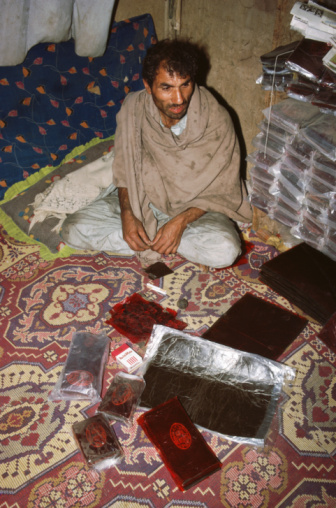


It was quite a journey until they reached Peshawar, but once there, with Helmut leading the way, they soon found and booked into the Rainbow Hotel. Reception gladly changed Afghani money into Pakistani Rupees.
The room for Al and Keith was small with two beds, but the view out of the window into the street below was good.

Saturday, 16 July 2016
Readers photo competition - help by giving some pics a LIKE on Facebook: All About My Hat - The Hippy Trail 1972
Reader's Pic Competition - top scores so far - please share the link on your page and generate more votes:
VOTES SO FAR ( 16/7/16 )
Paul FourTwenty Kelly 52
Melissa Dawdaughter 41
Sy Dignam 35
Giuseppe Albero 34
Frank Kirk 27
Lesley James 21
Emilio Napoli 20
Elizabeth Clarke 18
Nol van Shaik 17
Jackie Woodchild 16
Chris Philbin 15
Phil Norwich 13
Sharna van-Damme 13
Kate Midlane 13
Winston Matthews 13
Jacqui Maklin 13
Kevin Traylen 13
Rocky van de Benderskum 13
Give your friend's picture a like at:
https://www.facebook.com/allaboutmyhat/photos/?tab=album&album_id=1553921764890883
ISBN 978 0 9932107 1 6
http://www.buffry.org.uk/allaboutmyhat.html
watch and listen here:
watch and listen here:
Friday, 24 July 2015
“My name is Hellmut – you want smoke some joint” - Taken from: "All About My Hat - The Hippy Trail 1972" by Alun Buffry
Taken from: "All About My Hat - The Hippy Trail 1972" by Alun Buffry
(Available at Amazon as Paperback and for Kindle)
“My name is Hellmut – you want smoke some joint” .
He had lit and was offering them a joint – on the bus!
Well, I could tell Al liked the smell so he quickly accepted it with a “Danke” (thank you in German, Al thought). He took three rapid puffs and passed it to Keith who took three puffs and passed what was left back to Hellmut.
Al was feeling quite self-conscious about smoking on a bus heading to Pakistan. He thought everyone was looking.
He turned round to look back down the bus.
Almost every seat had a man leaning out and looking back up the bus at him!
And, Al noticed, they were all grinning and smiling and nodding - as if to say “You are stoned now, as we are stoned too."
Al thought those men probably did not smoke cannabis but it must have been in their blood, handed down over the centuries.
He relaxed, chatted with Helmut a while – Helmut said he travelled that route every year for ten years. Then as the calming effect of the lovely hash took over, he sat and started to enjoy what was to be an incredible journey through the Khyber Pass.
The over-laden coach trundled on, struggling up hills and rounding bends with sheer drops, then down and up again. At the end of most down bits there was a small waterfall. At the end of each up bits there was a beautiful view, often including the same road below them, winding around the boulders in between the fields.
 Khyber Pass
At some places there were what looked like caves in the sides of the hills.
We passed small groups of men that seemed to be just sitting and looking; we saw young boys driving herds of sheep or goats or camels and several times we had to stop to let them pass us.
Occasionally we saw groups of women carrying baskets, bundles or clay pots on their heads, trailed by urchin-looking children – her children always waving at the coach.
The women here were dressed very differently and, Al thought, more practically than those in Burkas. These showed their faces beneath head-scarves decorated with beads and chains and quite colourful too. These must be tribal mountain women, Al thought.
The coach was moving quite slowly and Al had a chance to take a couple of photographs through the window, of the valley below. He wished he had more film, but thought he would not be able to afford it .
Hellmut was quite jolly company and did lot of talking – they smoked another couple of joints.
He explained that he travelled this same route for years and the border post guards knew him – he always gave them a little money and they left him alone. He also said that every year he visited Afghanistan and Pakistan, India and Nepal, and arranged for shipments of hash to be sent back to London where his partner lived. He travelled for six months, then went back to London and his partner did the same. They were paying off customs everywhere, including the UK, and they were making a lot of money. But, he said, he preferred to stay in cheap hotels, not the big ones, and then he met people. So Hellmut too, was heading for the Hotel Rainbow.
“Very very cheap”, he said, “But it is OK for a few days, but do not eat their food – it is better to go out to eat in a secret local restaurant that I know, it is good and clean.”
Hellmut said that after Peshawar, he was heading to Lahore and then would fly to Amritsar where the “Golden Temple” was and where travellers could sleep and eat for free, courtesy of the Sikhs. The same plan as Al and Keith's – they used to call it the “Hippy Trail.”
It was quite a journey until they reached Peshawar, but once there, with Helmut leading the way, they soon found and booked into the Rainbow Hotel. Reception gladly changed Afghani money into Pakistani Rupees.
The room for Al and Keith was small with two beds, but the view out of the window into the street below was good.
It was May 5 1972.
The street looked like a chaotic mishmash of tumble-down buildings with broken or torn flags hanging everywhere. The road was pot-holed. It was crowded with people. There was a restaurant across the road. Al took a photograph – not many left.
There was no toilet in the room. In fact, there did not seem to be one visible at al. So still with me on his head, he went to the reception to ask.
“On roof,” said the small man sitting behind a desk reading a newspaper. He did not seen interested.
Al climbed two flights of stairs to find a door that opened onto the roof.
In the middle of the roof was a wooden structure with three doors, a couple of steps up and inside there was a hole in the concrete floor and a jug of water. The water was to wash instead of the Western toilet papers we had seen in some cities.
Below the hole was another level of concrete – piled with human shit. It was smelling real bad even though the day was cooling fast as the light was beginning to fade. The whole place was, of course, swarming with flies.
Later Al learned that the place was emptied once a day, the shit shovelled into wicker baskets lines with rushes and leaves, to be carried down through the hotel and into the street. Al could not imagine what they did with it after that. Those poor women deserved a reward. But he had nothing spare to even offer.
A while after returning to the room, there was a knock on the door. Keith jumped up and opened it and there stood Hellmut, grinning and with a smoking joint in his hand.
“Hello my friends, you want to smoke some hash with me and I buy you dinner?”
So they puffed on the joint, their spirits again lifting. Al had been wondering where he was – absolutely everything was so different to his home city; in fact it was so different to anything else he had seen even in the places we had passed through.
Al was thinking, what is different: well for starters the smells and the air, the people and their costumes, the language and the script, the food and the drink, the streets and the buildings, the transport, the health care, the hygiene and safety rules and protection, life expectancy and family life, politics and religion, even the ways in which business was conducted - people argued over prices.
And, thought Al, what is the same – well I guess I am, he thought – I guess everyone, well most people, have two arms, two legs and two eyes; we're all breathing; we probably all want the same thing, We all want to achieve something and to find fulfilment, peace, love, freedom.. We probably all wonder at some time what life is all about – or maybe their religions satisfy all that.
Al began wondering why he was travelling – what was he looking for. Religion and science had failed him, now he was feeling like he was wandering far from home, maybe risking his health and safety, taking risks in a dangerous part of the world and with very little money. “Am I nuts?” he thought.
But so far this adventure had gone well, and in any case there was only one direction to go and that was India. Al thought that it was said people could find answers in India – it was where The Beatles had gone to their Guru called Mahesh Yogi. It was a land of many beliefs, supposedly with enlightened beings willing to impart the truth. Or so he'd read. Probably not like that at all. And, thought Al, I probably don't have enough money to buy enlightenment.
 Pesahwar
Outside in the damp street, the women were dressed in black Burkas again, or colourful cloth wraps, except the Westerners of course. Some of them were well covered too and many wore head scarves. Almost all the Western men wore blue jeans, some with hats of varying sorts, and one even looking quite like myself.
The local men were of two distinct types. One lot were quite short in height and slight, dressed in what often looked like dirty pyjamas with white caps or wrapped in sheets of cloth. The other lot were massive, thick set giants over 6 feet in height, wearing turban-like headgear and armed with rifles and long swords.
Bicycles, three wheeler Rickshaws, and beasts of burden, were the main form of transport here.
Al spotted a sign above a doorway. It was a drawing of a set of false teeth.
There were three-wheeled street stalls with massive piles of apples, oranges, lemons and yellow and green melons for sale. Dirty-looking streets stalls offered strange looking food in huge pans cooking over charcoal or wood fires.
“You know, my friends, Peshawar is called the 'City of Thieves' – you can buy guns here – be careful with your bags,” said Hellmut.
“Fucking great, man,” said Keith.
The street was filthy.
“Two nights here, then I am going to Lahore on the train, if you want, my friends, I will tell the manager at the hotel and he will buy us tickets,” said Hellmut.
“How much do the tickets cost?” asked Keith.
“No problem my friends I am paying, you are my guests. Now we go to special place to eat and we can smoke hashish. It is called The Secret Restaurant and my friend from Berlin, Karl is running it. And his wife Marianna is from Switzerland. They have good vegetarian food and good music.
The Secret Restaurant was actually inside a large second floor apartment down a poorly lit back street and on to another main road, this time far busier with trucks, carts, colourful coaches, cars and bicycles – and men with donkeys carrying either them or their wares. The roadway and pavements were equally muddy and dirty and it was quite noisy. Street stalls were still selling fruit and vegetables and bottles of fizzy drinks – a lot of signs for Pepsi. Other stalls were issuing clouds of smoke or steam, offering a whole range of quite unpleasant looking foods. Hygiene was an absentee here.
But the apartment building itself, behind a large wall separating it from the road, and guarded at the entrance by a costumed and armed giant from the hills, was remarkably clean.
The guard greeted Hellmut and let us pass through the arched gateway. Hellmut pressed a buzzer near the doorway and soon a pretty young lady came to let us in. Hellmut greeted Marianna, they hugged like good old friends. She led the way for us up the stairs and into the apartment.
The apartment consisted of at least two bedrooms, kitchen, western toilet with shower and a massive living room with a balcony looking out on to what may have been the back garden or a park. There were several round tables with chairs in the room seating for maybe 16 people. That still left plenty of room for the many cushions scattered around by the walls. About half a dozen people sat at tables another half a dozen or so on the cushions. A young dark-haired girl was playing a guitar and singing 'The Circle Game”, a Joni Mitchelle song.
For a second or two Al thought it was Miriam, but no.
Al could see outside through a double glass door was a balcony – he could see people were smoking.
The three of us sat at a table; Al took me off his head and put me next on the table next to the fourth chair which was empty. I felt as if I too was a guest at this meal.
The meal was three courses of vegetarian food – two choices for each course.
Al chose dahl with bread, a Madras vegetable curry with rice, and pancakes with fruit. The dahl was a very hot dish made from lentils and onions and garlic. It was all delicious, to Al's taste. And Keith had finished his plates too. Keith had eaten vegetable samosas – triangle of pastry with spicy potatoes and vegetables inside – pasta with creamy sauce and cheese, and rice pudding for afters.
They each drank a beer. It was the first alcohol Al had drank since the Ouzo in Syria. It was not as strong but still went straight to his head. He felt giggly.
Afterwards they smoked chillums on the balcony, looking down on a garden complete with flowers and a small pool with trickling water.
Al was lost looking down at that pool. Suddenly he began to wonder where he was.
One minute there's a dirty gloomy fearful city at night, with all the hustle and bustle and smoky fumes. Next, a veggie banquet with beer and chillums and Hendrix playing ' Foxy Lady' on a balcony above a heavenly garden. "Maybe in fact", thought Al, "we're actually all dead! Or just sleeping, dreaming. Or being dreamt?"
Al was thinking of the nature of reality - or was it illusion? Science had told him that everything was made of atoms and molecules, forms of energy, but those very atoms were almost all space, with wisp-like clouds of negative charge called electrons around a positively charged nucleus itself made of tiny particles that were sometimes behaving like particles and sometimes like waves – the wave-particle duality. And in between it all, 99% was nothing but space. So we are all mostly space.
Al thought that just as ridiculous to believe as a religion saying we were all made out of and by some supreme creator four thousand years ago in the Garden of Eden.
And where was the Garden of Eden anyway?
Certainly not in Peshawar.
With that he realised he was sitting on a balcony, high as a kite, looking at a pool of water.
They drank another beer and Hellmut led them back to the hotel, this time taking a slightly different, longer but better lit route.
Was that fireworks or gunshots we could hear? Guns?
The next day was spent mostly in the Secret Restaurant smoking talking and eating.
The morning after that, they took the train to Lahore – direction India.
In comparison to the bus rides, the train journey was boring. It was about three hundred and twenty miles but it took many hours.
When they reached Lahore, Hellmut took a taxi to a hotel he knew and they soon booked in. It was another hotel for mostly western travellers.
It was the Hotel Eden!
A small hotel with about a dozen room surrounding a small open garden with small shady trees, potted flowers and a pool in the centre!
Eden! Was this the Garden of Eden that Al had been thinking about at the Secret Restaurant in Peshawar?
(Available at Amazon as Paperback and for Kindle)
“My name is Hellmut – you want smoke some joint” .
He had lit and was offering them a joint – on the bus!
Well, I could tell Al liked the smell so he quickly accepted it with a “Danke” (thank you in German, Al thought). He took three rapid puffs and passed it to Keith who took three puffs and passed what was left back to Hellmut.
Al was feeling quite self-conscious about smoking on a bus heading to Pakistan. He thought everyone was looking.
He turned round to look back down the bus.
Almost every seat had a man leaning out and looking back up the bus at him!
And, Al noticed, they were all grinning and smiling and nodding - as if to say “You are stoned now, as we are stoned too."
Al thought those men probably did not smoke cannabis but it must have been in their blood, handed down over the centuries.
He relaxed, chatted with Helmut a while – Helmut said he travelled that route every year for ten years. Then as the calming effect of the lovely hash took over, he sat and started to enjoy what was to be an incredible journey through the Khyber Pass.
The over-laden coach trundled on, struggling up hills and rounding bends with sheer drops, then down and up again. At the end of most down bits there was a small waterfall. At the end of each up bits there was a beautiful view, often including the same road below them, winding around the boulders in between the fields.
Khyber PassAt some places there were what looked like caves in the sides of the hills.
We passed small groups of men that seemed to be just sitting and looking; we saw young boys driving herds of sheep or goats or camels and several times we had to stop to let them pass us.
Occasionally we saw groups of women carrying baskets, bundles or clay pots on their heads, trailed by urchin-looking children – her children always waving at the coach.
The women here were dressed very differently and, Al thought, more practically than those in Burkas. These showed their faces beneath head-scarves decorated with beads and chains and quite colourful too. These must be tribal mountain women, Al thought.
The coach was moving quite slowly and Al had a chance to take a couple of photographs through the window, of the valley below. He wished he had more film, but thought he would not be able to afford it .
Hellmut was quite jolly company and did lot of talking – they smoked another couple of joints.
He explained that he travelled this same route for years and the border post guards knew him – he always gave them a little money and they left him alone. He also said that every year he visited Afghanistan and Pakistan, India and Nepal, and arranged for shipments of hash to be sent back to London where his partner lived. He travelled for six months, then went back to London and his partner did the same. They were paying off customs everywhere, including the UK, and they were making a lot of money. But, he said, he preferred to stay in cheap hotels, not the big ones, and then he met people. So Hellmut too, was heading for the Hotel Rainbow.
“Very very cheap”, he said, “But it is OK for a few days, but do not eat their food – it is better to go out to eat in a secret local restaurant that I know, it is good and clean.”
Hellmut said that after Peshawar, he was heading to Lahore and then would fly to Amritsar where the “Golden Temple” was and where travellers could sleep and eat for free, courtesy of the Sikhs. The same plan as Al and Keith's – they used to call it the “Hippy Trail.”
It was quite a journey until they reached Peshawar, but once there, with Helmut leading the way, they soon found and booked into the Rainbow Hotel. Reception gladly changed Afghani money into Pakistani Rupees.
The room for Al and Keith was small with two beds, but the view out of the window into the street below was good.
It was May 5 1972.
The street looked like a chaotic mishmash of tumble-down buildings with broken or torn flags hanging everywhere. The road was pot-holed. It was crowded with people. There was a restaurant across the road. Al took a photograph – not many left.
There was no toilet in the room. In fact, there did not seem to be one visible at al. So still with me on his head, he went to the reception to ask.
“On roof,” said the small man sitting behind a desk reading a newspaper. He did not seen interested.
Al climbed two flights of stairs to find a door that opened onto the roof.
In the middle of the roof was a wooden structure with three doors, a couple of steps up and inside there was a hole in the concrete floor and a jug of water. The water was to wash instead of the Western toilet papers we had seen in some cities.
Below the hole was another level of concrete – piled with human shit. It was smelling real bad even though the day was cooling fast as the light was beginning to fade. The whole place was, of course, swarming with flies.
Later Al learned that the place was emptied once a day, the shit shovelled into wicker baskets lines with rushes and leaves, to be carried down through the hotel and into the street. Al could not imagine what they did with it after that. Those poor women deserved a reward. But he had nothing spare to even offer.
A while after returning to the room, there was a knock on the door. Keith jumped up and opened it and there stood Hellmut, grinning and with a smoking joint in his hand.
“Hello my friends, you want to smoke some hash with me and I buy you dinner?”
So they puffed on the joint, their spirits again lifting. Al had been wondering where he was – absolutely everything was so different to his home city; in fact it was so different to anything else he had seen even in the places we had passed through.
Al was thinking, what is different: well for starters the smells and the air, the people and their costumes, the language and the script, the food and the drink, the streets and the buildings, the transport, the health care, the hygiene and safety rules and protection, life expectancy and family life, politics and religion, even the ways in which business was conducted - people argued over prices.
And, thought Al, what is the same – well I guess I am, he thought – I guess everyone, well most people, have two arms, two legs and two eyes; we're all breathing; we probably all want the same thing, We all want to achieve something and to find fulfilment, peace, love, freedom.. We probably all wonder at some time what life is all about – or maybe their religions satisfy all that.
Al began wondering why he was travelling – what was he looking for. Religion and science had failed him, now he was feeling like he was wandering far from home, maybe risking his health and safety, taking risks in a dangerous part of the world and with very little money. “Am I nuts?” he thought.
But so far this adventure had gone well, and in any case there was only one direction to go and that was India. Al thought that it was said people could find answers in India – it was where The Beatles had gone to their Guru called Mahesh Yogi. It was a land of many beliefs, supposedly with enlightened beings willing to impart the truth. Or so he'd read. Probably not like that at all. And, thought Al, I probably don't have enough money to buy enlightenment.
PesahwarOutside in the damp street, the women were dressed in black Burkas again, or colourful cloth wraps, except the Westerners of course. Some of them were well covered too and many wore head scarves. Almost all the Western men wore blue jeans, some with hats of varying sorts, and one even looking quite like myself.
The local men were of two distinct types. One lot were quite short in height and slight, dressed in what often looked like dirty pyjamas with white caps or wrapped in sheets of cloth. The other lot were massive, thick set giants over 6 feet in height, wearing turban-like headgear and armed with rifles and long swords.
Bicycles, three wheeler Rickshaws, and beasts of burden, were the main form of transport here.
Al spotted a sign above a doorway. It was a drawing of a set of false teeth.
There were three-wheeled street stalls with massive piles of apples, oranges, lemons and yellow and green melons for sale. Dirty-looking streets stalls offered strange looking food in huge pans cooking over charcoal or wood fires.
“You know, my friends, Peshawar is called the 'City of Thieves' – you can buy guns here – be careful with your bags,” said Hellmut.
“Fucking great, man,” said Keith.
The street was filthy.
“Two nights here, then I am going to Lahore on the train, if you want, my friends, I will tell the manager at the hotel and he will buy us tickets,” said Hellmut.
“How much do the tickets cost?” asked Keith.
“No problem my friends I am paying, you are my guests. Now we go to special place to eat and we can smoke hashish. It is called The Secret Restaurant and my friend from Berlin, Karl is running it. And his wife Marianna is from Switzerland. They have good vegetarian food and good music.
The Secret Restaurant was actually inside a large second floor apartment down a poorly lit back street and on to another main road, this time far busier with trucks, carts, colourful coaches, cars and bicycles – and men with donkeys carrying either them or their wares. The roadway and pavements were equally muddy and dirty and it was quite noisy. Street stalls were still selling fruit and vegetables and bottles of fizzy drinks – a lot of signs for Pepsi. Other stalls were issuing clouds of smoke or steam, offering a whole range of quite unpleasant looking foods. Hygiene was an absentee here.
But the apartment building itself, behind a large wall separating it from the road, and guarded at the entrance by a costumed and armed giant from the hills, was remarkably clean.
The guard greeted Hellmut and let us pass through the arched gateway. Hellmut pressed a buzzer near the doorway and soon a pretty young lady came to let us in. Hellmut greeted Marianna, they hugged like good old friends. She led the way for us up the stairs and into the apartment.
The apartment consisted of at least two bedrooms, kitchen, western toilet with shower and a massive living room with a balcony looking out on to what may have been the back garden or a park. There were several round tables with chairs in the room seating for maybe 16 people. That still left plenty of room for the many cushions scattered around by the walls. About half a dozen people sat at tables another half a dozen or so on the cushions. A young dark-haired girl was playing a guitar and singing 'The Circle Game”, a Joni Mitchelle song.
For a second or two Al thought it was Miriam, but no.
Al could see outside through a double glass door was a balcony – he could see people were smoking.
The three of us sat at a table; Al took me off his head and put me next on the table next to the fourth chair which was empty. I felt as if I too was a guest at this meal.
The meal was three courses of vegetarian food – two choices for each course.
Al chose dahl with bread, a Madras vegetable curry with rice, and pancakes with fruit. The dahl was a very hot dish made from lentils and onions and garlic. It was all delicious, to Al's taste. And Keith had finished his plates too. Keith had eaten vegetable samosas – triangle of pastry with spicy potatoes and vegetables inside – pasta with creamy sauce and cheese, and rice pudding for afters.
They each drank a beer. It was the first alcohol Al had drank since the Ouzo in Syria. It was not as strong but still went straight to his head. He felt giggly.
Afterwards they smoked chillums on the balcony, looking down on a garden complete with flowers and a small pool with trickling water.
Al was lost looking down at that pool. Suddenly he began to wonder where he was.
One minute there's a dirty gloomy fearful city at night, with all the hustle and bustle and smoky fumes. Next, a veggie banquet with beer and chillums and Hendrix playing ' Foxy Lady' on a balcony above a heavenly garden. "Maybe in fact", thought Al, "we're actually all dead! Or just sleeping, dreaming. Or being dreamt?"
Al was thinking of the nature of reality - or was it illusion? Science had told him that everything was made of atoms and molecules, forms of energy, but those very atoms were almost all space, with wisp-like clouds of negative charge called electrons around a positively charged nucleus itself made of tiny particles that were sometimes behaving like particles and sometimes like waves – the wave-particle duality. And in between it all, 99% was nothing but space. So we are all mostly space.
Al thought that just as ridiculous to believe as a religion saying we were all made out of and by some supreme creator four thousand years ago in the Garden of Eden.
And where was the Garden of Eden anyway?
Certainly not in Peshawar.
With that he realised he was sitting on a balcony, high as a kite, looking at a pool of water.
They drank another beer and Hellmut led them back to the hotel, this time taking a slightly different, longer but better lit route.
Was that fireworks or gunshots we could hear? Guns?
The next day was spent mostly in the Secret Restaurant smoking talking and eating.
The morning after that, they took the train to Lahore – direction India.
In comparison to the bus rides, the train journey was boring. It was about three hundred and twenty miles but it took many hours.
When they reached Lahore, Hellmut took a taxi to a hotel he knew and they soon booked in. It was another hotel for mostly western travellers.
It was the Hotel Eden!
A small hotel with about a dozen room surrounding a small open garden with small shady trees, potted flowers and a pool in the centre!
Eden! Was this the Garden of Eden that Al had been thinking about at the Secret Restaurant in Peshawar?
Subscribe to:
Posts (Atom)